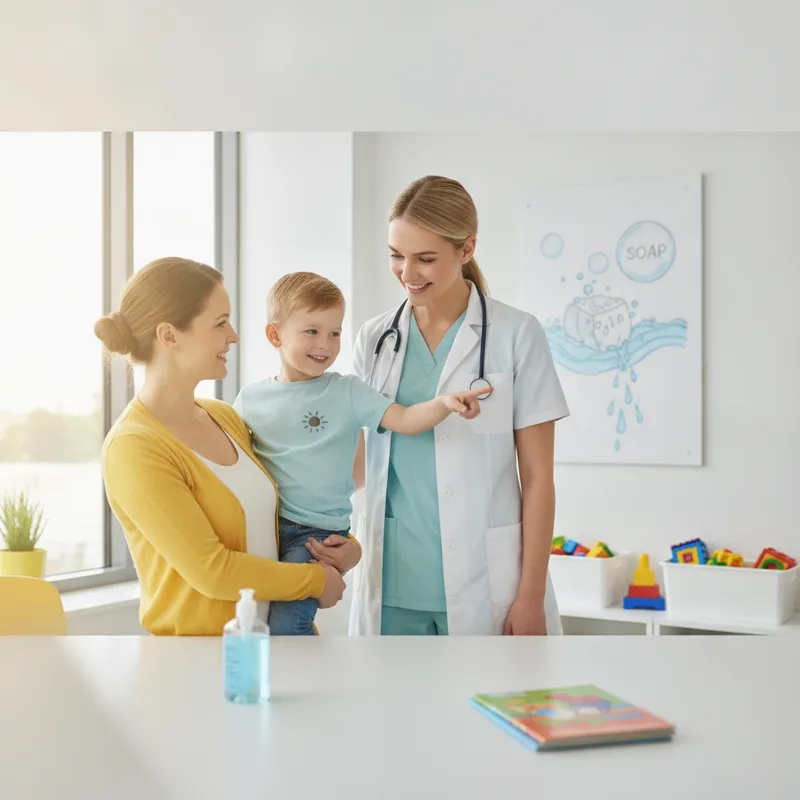
Kids touch everything. They share toys, wipe their noses on their sleeves, and put fingers in their mouths without thinking. That is a normal part of childhood, and it is also how many colds, stomach bugs and other infections spread. You cannot keep every germ away, but a few simple habits, practiced every day, can cut down how often your family gets sick. Handwashing is the place to start.
How to wash hands the right way
Good handwashing is less about the soap and more about the scrubbing. Plain soap works well. Antibacterial soap is not needed for everyday use at home.
- Wet hands with clean running water, warm or cold.
- Lather with soap.
- Scrub for at least 20 seconds. Rub the palms, the backs of the hands, between the fingers, the thumbs, and under the nails. Humming "Happy Birthday" twice is about the right length.
- Rinse well under running water.
- Dry with a clean towel or paper towel, or let them air dry.
The scrubbing is what loosens germs and dirt so the water can carry them away. A quick rinse without soap does very little.
When kids should wash
- Before eating, and before helping to prepare food
- After using the toilet
- After blowing their nose, coughing or sneezing
- After playing outside or in the sandbox
- After touching pets, pet food, or animal areas at farms and petting zoos
- After being around someone who is sick
- When they come home from school, child care, the store or the playground
- Any time hands look or feel dirty
Adults should wash after changing diapers, before feeding a baby, and after caring for a sick child.
Making it stick: teaching kids
Young children learn by copying. If they see you wash every time you come in the door, they will start to do the same. A few other ideas:
- Make the sink easy to reach with a sturdy step stool, and keep soap and a towel within reach.
- Use a song or timer. Let your child pick the song. A sand timer by the sink works well too.
- Let them choose a fun soap or a hand towel in their favorite color.
- Show where germs hide. Rub a little washable paint or lotion with glitter on their hands, then let them see how much scrubbing it takes to get it all off.
- Check nails. Keeping nails short makes them easier to clean.
- Praise the habit, not just the result.
- Talk to older kids about why it matters. They are more likely to wash at school if they understand that it keeps them from missing games, trips and time with friends.
What about hand sanitizer?
Soap and water is best. When there is no sink nearby, an alcohol-based hand sanitizer with at least 60% alcohol is a good backup. Use enough to cover all surfaces of the hands, and rub until dry.
Keep in mind:
- Sanitizer does not work well when hands are visibly dirty or greasy.
- It does not kill every germ. Some stomach bugs, including norovirus, are better removed with soap and water.
- Supervise young children when they use it. Swallowing even a small amount can cause alcohol poisoning. Store it out of reach, and if your child swallows some, call Poison Control at 1-800-222-1222.
Covering coughs and sneezes
Teach your child to cough or sneeze into a tissue, throw it away, and then wash their hands. If there is no tissue, coughing into the elbow is better than coughing into the hands. Practice it as a game with younger kids. Also teach your child to try to keep their hands away from their eyes, nose and mouth, which is how many germs get into the body.
Keeping sick kids home
Staying home when sick helps your child rest and recover, and it protects classmates, teachers and family members who may be more at risk. As a general guide, keep your child home if they have:
- A fever. Many schools ask that children be fever-free for 24 hours without fever-reducing medicine before returning.
- Vomiting or diarrhea
- A rash with fever, or a rash your pediatrician has not checked
- An illness that keeps them from taking part in normal activities
- A contagious infection, such as strep throat or pink eye, until they have been treated for as long as your pediatrician or school requires
Schools and child care centers in Texas follow rules on when sick children must stay home for certain illnesses. Check your school's policy, and see the Texas Department of State Health Services for state public health information.
Cleaning at home
- Focus on high-touch surfaces like doorknobs, light switches, faucet handles, remotes, phones, tablets and toilet handles, especially when someone is sick.
- Clean first, then disinfect. Cleaning with soap and water removes dirt and many germs. A disinfectant kills more of what is left. Follow the label directions, including how long the surface needs to stay wet.
- Do not share cups, utensils, towels or toothbrushes, and give a sick child their own hand towel.
- Wash toys that go in mouths, and run washable plush toys through the laundry.
- Store cleaning products locked up and out of reach. Never mix bleach with ammonia or other cleaners.
- Let in fresh air when the weather allows.
Staying up to date on the vaccines your pediatrician recommends adds another layer of protection against many serious infections. For more on keeping kids healthy, visit MedlinePlus on germs and hygiene.
When to call us
Call your A thru Z Pediatrics office if your child has a fever lasting more than a few days, signs of dehydration such as very little pee, an illness that is getting worse instead of better, or if you are unsure whether they should stay home. If your baby under 3 months has a temperature of 100.4°F or higher, call right away.
Call 911 or go to the nearest ER if your child has trouble breathing, is very hard to wake, has blue or gray lips, or has a seizure.
For a sick visit or checkup, you can request a visit online.
This article is general information, not medical advice. If you have concerns about your child's health, call your A thru Z Pediatrics office.