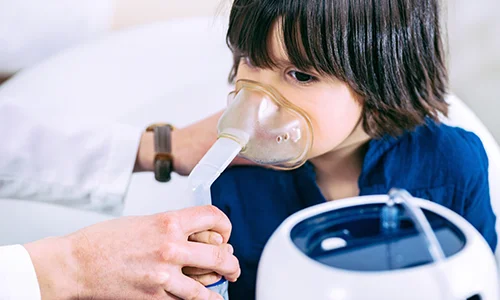
Understanding Asthma
Asthma is a common chronic respiratory condition characterized by inflammation and narrowing of the airways. This leads to recurring episodes of wheezing, chest tightness, shortness of breath, and coughing, often worsening at night or in the early morning. Triggers can include allergens, cold air, physical activity, or respiratory infections.
Recognizing Symptoms of Asthma
You might notice several signs in your child that could indicate asthma:
- Rapid Breathing: Noticeable increase in breathing rate, especially noticeable during physical play.
- Repetitive Frequent Coughing: Often occurs during play or at night, disrupting sleep.
- Difficulty Breathing: Challenges in breathing normally, which may seem more pronounced during physical activity or at rest.
- Wheezing: A whistling or wheezing sound when exhaling, which is a key sign of airway obstruction
- Behavioral Changes: In younger children, this might include increased irritability or noticeably reduced energy during play.
Asthma Treatment
At A Thru Z Pediatrics , San Antonio, your health care provider will provide you guidance on asthma testing, its control and follow-up, asthma management, medications administration, flu vaccination, asthma action plan development and active partnership between providers and patients in patient education and self management.
Getting Ready for your Asthma Appointment
Good communication with your child’s doctor leads to better outcomes! Prepare before your child’s appointment. Write down your child’s medicines or bring them with you. Write down your questions or concerns so you don’t forget to ask. Some things you may want to talk about include:
- How often your child uses a quick relief (rescue) medicine?
- If asthma keeps your child up at night?
- If your child’s Asthma Action Plan is up to date
- If your child is using his/her inhaler the right way
- The things that trigger your child’s asthma attacks.
Managing Asthma at School
Children and teens with asthma will need an asthma health plans to make sure their medical needs are met during the school day. You will want to know if there is a nurse at the school, and if your child can carry his or her medicine. You will also work with the school to create a plan if your child has an asthma emergency. The resources below provide ideas for working with your school and for making asthma plans.
- American Academy of Pediatrics (Committee on School Health): www.schoolhealth.org
- Center for Health and Health Care in Schools, School Children with Asthma: www.healthinschools.org/sh/asthma.asp
- Centers for Disease Control and Prevention, Division of Adolescent Health and School Health: www.cdc.gov/healthyyouth/asthma
This page is general information, not medical advice. If you are worried about your child, call your office, and for an emergency, call 911.