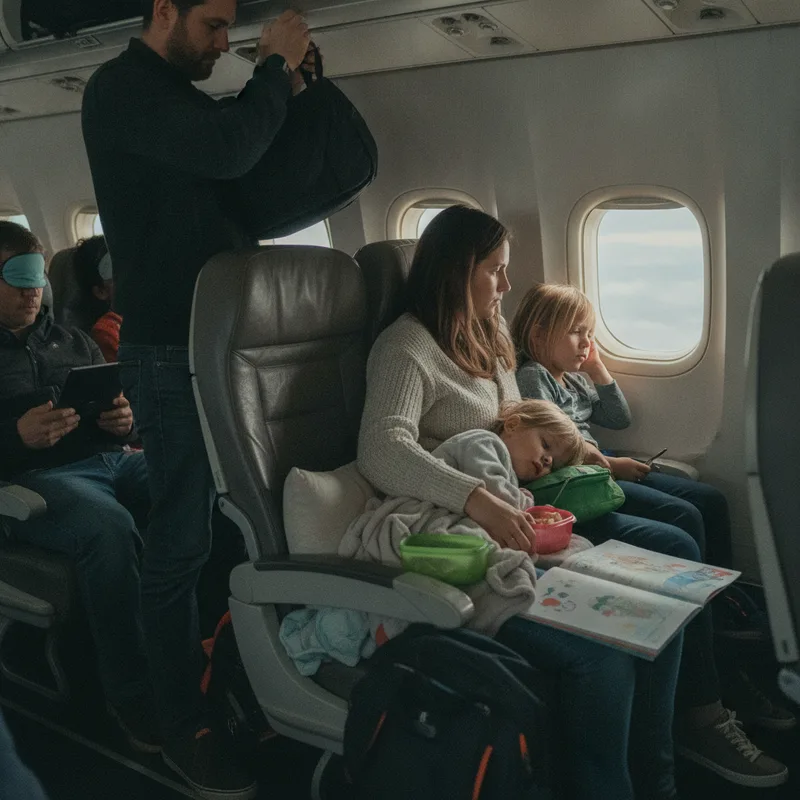
Holiday trips are full of good things: grandparents, cousins, new places. They also tend to scramble the habits that keep kids rested and steady. Late nights, long drives, a strange bed and a different time zone can add up to a cranky, overtired child by day three. You cannot control everything on a trip, but a little planning around sleep and routines goes a long way.
Start shifting before you leave
If you know the trip will move bedtime, start nudging it a few days ahead. Move bedtime and wake-up time by about 15 to 30 minutes a day in the direction you will need. Heading east, that means a little earlier each night. Heading west, a little later. Small steps are easier on kids than one big jump.
Also try to make sure your child is well rested going into the trip. A child who starts the journey already short on sleep has less room to cope with delays and excitement.
Handling time-zone changes
Children's body clocks adjust to a new time zone over a few days. A rough guide is about one day per hour of time change, though every child is different. A few things help the body clock catch up faster:
- Use daylight. Light is the strongest signal to the body clock. Get outside in the morning in your new location, especially after traveling east. After traveling west, time outside in the late afternoon helps keep kids awake until a reasonable bedtime.
- Keep evenings dim. Lower the lights and turn off screens in the hour before bed so your child's body gets the message that night is coming.
- Eat on local time. Serve meals at normal times for where you are, even if your child is not very hungry at first. Regular mealtimes help reset the internal clock.
- Keep naps short and early. If your child needs a nap on arrival day, keep it short and not too close to bedtime so night sleep is not pushed later. Babies and toddlers who still nap should keep their naps, timed to the new clock.
For a short trip of only a day or two across one time zone, some families simply stay on home time. That can be easier than adjusting twice.
Sleeping in a new place
A familiar bedtime routine travels well even when the room does not. Bring the same pajamas, a favorite book, a comfort object for older children, and a small night-light or white noise if your child uses one at home. Keep the steps of bedtime in the same order: bath, teeth, story, song, lights out.
Some children wake up more in a new place. Go to them calmly, reassure them briefly, and keep things quiet and boring. It usually settles after a night or two.
Safe sleep for babies away from home
Hotel rooms and relatives' homes often do not have a safe place for a baby to sleep, and well-meaning family may offer a spot that is not safe. Wherever you stay, the same rules apply as at home:
- Place your baby on their back for every nap and night.
- Use a firm, flat surface made for infant sleep, like a portable crib or play yard, with only a fitted sheet made for it.
- Keep pillows, blankets, bumpers and stuffed animals out of the sleep space.
- Do not let your baby sleep on an adult bed, couch, armchair, air mattress or in a car seat or swing out of the car. If your baby falls asleep in the car seat during the drive, move them to a safe sleep surface once you arrive.
- Share a room, not a bed.
If you borrow a crib, check that it meets current safety standards, has no drop side, and has no missing or loose parts. Calling ahead to the hotel, or packing your own play yard, saves a scramble at midnight. The AAP's guide to safe sleep on HealthyChildren.org explains each of these points.
Meals and snacks
Holiday food is part of the fun, and a few treats are fine. Try to keep regular meals and snacks in between so your child is not running on sugar alone. Pack easy, filling snacks for travel days, offer water often, and keep at least one familiar food on hand for picky eaters. Hungry, thirsty kids sleep worse and melt down sooner.
Screen time
A tablet can be a lifesaver on a long flight, and it is okay to relax the usual limits on travel days. Back on the ground, try to protect the hour before bed. Screens late in the evening can push sleep later and make it harder to adjust to a new time zone. Swap in books, a card game or a walk with the family.
What about melatonin?
Melatonin is sold over the counter, and some parents wonder if it can help with jet lag. Talk with your pediatrician before giving it to your child. The amount in products can vary from what the label says, and it is not the right choice for every child. Light, timing and routine are the first tools to try. HealthyChildren.org has more in what parents should know about melatonin for kids. If you do have melatonin or any other supplements or medicines in your luggage or a relative's home, keep them up high and out of reach. Gummies look like candy. If a child gets into them, call Poison Control at 1-800-222-1222.
Getting back on track at home
- If you can, plan a quiet day at home before school or daycare starts again.
- Return to your usual wake-up time right away, even if your child went to bed late. A steady morning time helps reset the whole day.
- Get outside in the morning light and keep meals on schedule.
- Go back to your normal bedtime routine on the first night home.
- Expect a few days of extra fussiness. Most kids are back to normal within a week.
When to call us
Call your A thru Z Pediatrics office if your child is still having trouble sleeping a week or two after you get home, if you are thinking about melatonin or any sleep aid, if your child snores loudly or seems to pause breathing during sleep, or if your child gets sick while traveling and you are not sure what to do. A baby under 3 months with a temperature of 100.4°F or higher needs a call right away, wherever you are.
Call 911 or go to the nearest ER if your child has trouble breathing, is very hard to wake, or has any other emergency. If you are out of town, find the nearest emergency room before you need it.
To check in about sleep or routines, you can request a visit online.
This article is general information, not medical advice. If you have concerns about your child's health, call your A thru Z Pediatrics office.