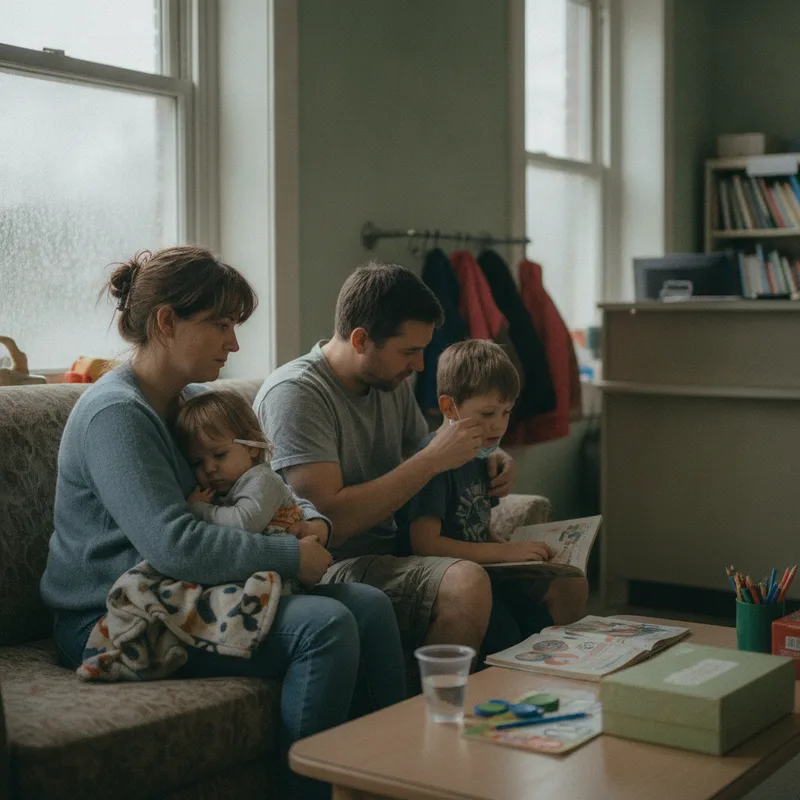
Every winter, the flu works its way through schools, daycares and homes. Most children who catch it feel miserable for several days and then get better at home. Some, though, get very sick, and young children are more likely to have trouble. Knowing what flu looks like, how to care for your child, and which signs mean you need help fast can make a hard week a little easier.
Flu or a cold?
Influenza (the flu) is caused by flu viruses that infect the nose, throat and lungs. A cold is caused by other viruses and is usually milder. The two can look alike at first, but there are a few clues:
- How fast it starts. A cold tends to creep in over a day or two. Flu often hits suddenly. Your child may seem fine at breakfast and be in bed with a high fever by afternoon.
- How sick your child feels. Children with a cold often keep playing. Children with flu usually feel achy, worn out and want to lie down.
- Fever. Fever is common with flu and is often higher than with a cold.
Only a test can tell for sure. Your pediatrician may do a quick swab of the nose if the result would change the plan, for example when deciding about antiviral medicine.
What flu can look like at different ages
Babies and toddlers
Little ones cannot tell you they ache. Instead you may notice fever, fussiness that is hard to settle, sleeping more than usual, poor feeding, a runny nose and cough. Some babies have vomiting or diarrhea. In a baby under 3 months, a temperature of 100.4°F or higher is a reason to call your pediatrician right away, day or night.
School-age children and teens
Older kids usually describe the classic picture: fever or chills, headache, sore throat, dry cough, body aches and deep tiredness. Some have an upset stomach too. The fever often lasts a few days. The cough and tiredness can hang on for a week or two after that.
Caring for your child at home
- Fluids come first. Offer small sips often: water, milk, an oral rehydration drink, broth or ice pops. Babies should keep nursing or taking formula. Appetite will be low for a few days, and that is fine as long as your child is drinking.
- Rest. Let your child sleep and lie around as much as they want. Quiet activities like books or a movie are fine.
- Comfort for fever and aches. Fever itself is the body fighting the virus, so the goal is comfort, not a perfect number. If your child is uncomfortable, ask your pediatrician or pharmacist which fever reducer to use and the right dose for your child's weight. Dress your child in light layers and keep the room comfortable.
- Never give aspirin or products that contain it to a child or teen with flu. It has been linked to Reye syndrome, a rare but serious illness. Check labels on combination products.
- Cough and cold medicines are not recommended for young children. Ask your pediatrician before using any of them.
- Stuffy nose. Saline drops and gentle suction help babies breathe and feed. A cool-mist humidifier can help too.
Antiviral medicine
There are prescription medicines that work against the flu virus. They do not cure flu overnight, but they can shorten the illness and lower the chance of complications. They work best when started early, ideally within the first two days of symptoms.
Antivirals are especially important for children at higher risk of serious illness. That includes children under 5 (and most of all those under 2) and children with conditions like asthma, diabetes, heart disease, a weakened immune system or a neurologic condition. If your child is in one of these groups and starts to show flu symptoms, call your pediatrician early rather than waiting to see if things get worse. Your pediatrician will decide whether medicine makes sense for your child.
Antibiotics do not treat the flu, since it is a virus. They are only used if a bacterial infection, like an ear infection or pneumonia, develops on top of it.
Warning signs that need help right away
Call 911 or go to the emergency room if your child:
- Is struggling to breathe, breathing very fast, or the skin between the ribs pulls in with each breath
- Has bluish or gray lips, face or nails
- Has chest pain, or severe muscle pain that keeps them from walking
- Is very hard to wake, does not respond, or does not want to be held
- Has a seizure
- Seems confused or is not acting like themselves
Call your pediatrician the same day if your child:
- Shows signs of dehydration: no urine in 8 hours, a dry mouth, or no tears when crying
- Has a fever above 104°F, or any fever in a baby under 12 weeks
- Has a fever that lasts more than 3 days
- Starts to get better and then gets worse again, with fever or cough coming back. This can be a sign of a second infection like pneumonia.
- Has a chronic condition, like asthma, that is getting worse
How long is flu contagious?
Children can spread flu starting about a day before they feel sick, and usually for around a week after symptoms begin. Young children may spread it for longer. The virus moves through coughs, sneezes and shared hands, cups and toys.
Keep your child home while they have a fever. A good rule is that your child can go back to school or daycare once they have been fever-free for at least 24 hours without fever-reducing medicine and their other symptoms are getting better overall. A lingering mild cough is common and does not have to keep a child home if they feel well enough to take part. Your school or daycare may have its own rules, so check with them.
Preventing the flu
The yearly flu vaccine
The flu vaccine is the best protection we have. The American Academy of Pediatrics flu page on HealthyChildren.org advises a flu vaccine every year for everyone 6 months and older. Flu viruses change, and protection fades, so last year's shot is not enough. Some children under 9 who are getting the vaccine for the first time need two doses a few weeks apart. Ask your pediatrician what your child needs as part of the schedule your pediatrician recommends.
The vaccine does not prevent every case, but vaccinated children who do catch flu tend to have a milder illness. Getting it in the fall, before flu spreads widely, is ideal, but getting it later in the season still helps. Babies under 6 months are too young for the vaccine, so the people around them, including parents, siblings and caregivers, getting vaccinated helps protect them. A flu vaccine during pregnancy also passes some protection to the newborn.
Everyday habits
- Wash hands with soap and water for about 20 seconds, especially before eating and after blowing noses. Hand sanitizer is a good backup.
- Teach kids to cough and sneeze into a tissue or their elbow.
- Do not share cups, utensils or water bottles.
- Wipe down doorknobs, faucets and remotes when someone at home is sick.
- Keep sick children home, and keep sick visitors away from newborns.
For more on flu symptoms and prevention, see MedlinePlus: Flu.
When to call us
Call your A thru Z Pediatrics office if your child has flu symptoms and is under 5 or has a condition like asthma, if your baby under 3 months has a temperature of 100.4°F or higher, if you see signs of dehydration, if fever lasts more than 3 days, or if your child starts to improve and then gets worse. Call us too if you are unsure whether your child needs to be seen.
Call 911 or go to the nearest ER for trouble breathing, bluish lips or face, a seizure, or a child who is very hard to wake. If you think your child swallowed too much of any medicine, call Poison Control at 1-800-222-1222.
For a non-urgent visit, including a flu vaccine, you can request a visit online.
This article is general information, not medical advice. If you have concerns about your child's health, call your A thru Z Pediatrics office.