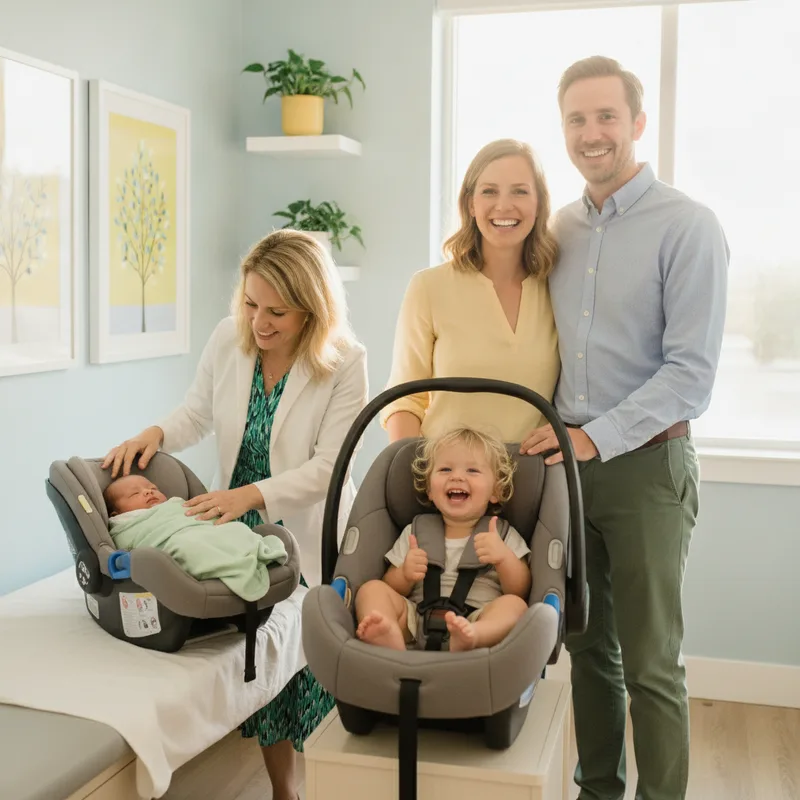
Your baby's first car ride is usually the trip home from the hospital, and a car seat that fits and is installed correctly is what keeps them safe on that ride and every one after. Car seats work very well when they are used the right way. The problem is that small mistakes are common and easy to miss. This guide covers the main things to get right for newborns and babies.
Rear-facing is the rule for babies
All babies should ride rear-facing. In a crash, a rear-facing seat cradles the head, neck and back and spreads the force across the whole seat shell. A baby's neck and spine are not ready to handle the forward jolt of a crash while facing forward.
The American Academy of Pediatrics advises keeping children rear-facing as long as possible, until they reach the highest weight or height their seat allows for rear-facing. Many convertible seats allow rear-facing until age 2 or beyond. Do not rush to turn your child around when their legs touch the vehicle seat back; bent legs are comfortable and safe for them. The AAP covers all stages on its car seat information page for families.
Infant seat or convertible seat?
- Infant-only seats are small, have a carrying handle and usually click into a base that stays in the car. They are handy for the first months but are outgrown sooner.
- Convertible seats stay in the car and can be used rear-facing and later forward-facing. Many fit newborns well, but check the lowest weight limit and whether the harness fits your baby snugly.
Either choice is safe if it fits your baby and your vehicle and is used correctly. Price does not decide safety; all seats sold in the US must pass the same federal crash standards.
Getting the installation right
- Back seat only. Never place a rear-facing seat in front of an active airbag. The back seat is the safest place for all children under 13.
- Use one method. Install with either the vehicle seat belt or the lower anchor system (LATCH), not both, unless your seat's manual says otherwise. Check the weight limit for the lower anchors.
- Tight test. Grip the seat where the belt or anchor strap passes through. It should not move more than about an inch side to side or front to back.
- Correct angle. Rear-facing seats have an angle indicator. Newborns need enough recline to keep their airway open and their head from falling forward.
- Read both manuals. Your car seat manual and your vehicle owner's manual both have important instructions.
Harness fit
Even a well installed seat cannot protect a baby who is loosely buckled. Check every ride:
- For rear-facing, the harness straps should come from slots at or just below your baby's shoulders.
- The straps should be flat, not twisted, and snug. Try the pinch test: if you can pinch a fold of strap at the shoulder, tighten it more.
- The chest clip should be at armpit level, not down on the belly.
- Do not add head pillows, strap covers, inserts or mirrors that did not come with your seat, unless the seat maker approves them. They have not been crash tested with your seat.
- Rolled receiving blankets can be tucked along the sides of a tiny baby for support, but never under or behind the baby or under the straps.
No puffy coats in the seat
Bulky jackets and snowsuits squash down in a crash, leaving the harness too loose. San Antonio winters are mild, but on chilly mornings dress your baby in thin layers, buckle them in snugly, then lay a blanket or their coat over the harness.
Used seats and expiration dates
Car seats do not last forever. Plastic weakens with age and heat, and standards change. Look for the expiration date or date of manufacture on a label or stamped into the plastic. Many seats last roughly 6 to 10 years, but follow your seat's own date.
A used seat is only a good idea if you know its full history. Do not use a seat that:
- Has been in a moderate or severe crash.
- Is past its expiration date or has no date or model label.
- Has cracks, missing parts or no instructions.
- Has been recalled. Register any seat you use so the maker can reach you about recalls.
Get your seat checked
Certified child passenger safety technicians can check your installation and show you how to do it yourself. Many fire stations, hospitals and community groups hold free car seat check events. Try to have your seat checked before your due date so you are not learning on the way home from the hospital.
Never leave a child alone in a car
In Texas, the inside of a parked car can become dangerously hot very fast, even on days that do not feel extreme and even with a window cracked. Babies heat up much faster than adults. Never leave your child in a car, not even for a quick errand.
- Put something you need, like your phone or bag, in the back seat next to the car seat so you always check.
- Ask your child care provider to call you if your child does not arrive as planned.
- Keep cars locked and keys out of reach so children cannot climb in on their own.
- If you see a child alone in a car, call 911.
The AAP shares more safety tips at HealthyChildren.org.
When to call us
Call your A thru Z Pediatrics office if:
- Your baby was born early, has low muscle tone, or has breathing problems, and you have questions about car seat positioning.
- Your baby has been in any car crash, even a minor one, and seems fussy, sleepy or not themselves.
- You are unsure which seat fits your baby's size.
Call 911 after any serious crash, or if your child has trouble breathing, is hard to wake, or seems overheated after time in a car. To talk about safety at your baby's next checkup, request a visit.
This article is general information, not medical advice. If you have concerns about your child's health, call your A thru Z Pediatrics office.