Understanding Fevers
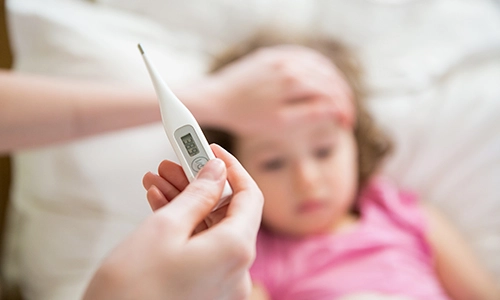
A fever is a temporary increase in body temperature, often due to an underlying infection. It is a common response to illness and is part of the body’s natural defense mechanism. While a fever can be concerning for parents, it is typically a sign that the body is fighting off an infection.
Recognizing Symptoms of a Fever
You might notice several signs in your child that could indicate a fever:
- Elevated Temperature: A body temperature higher than 100.4°F (38°C) when measured with a thermometer.
- Sweating: Excessive sweating as the body tries to cool down.
- Chills: Shivering or chills, despite a high body temperature.
- Flushed Skin: Red, warm skin, particularly on the face.
- Irritability: Increased fussiness or irritability due to discomfort.
- Fatigue: Unusual tiredness or lack of energy.
- Headache: Complaints of head pain.
- Loss of Appetite: Reduced desire to eat or drink.
This page is general information, not medical advice. If you are worried about your child, call your office, and for an emergency, call 911.